Winter Food Trucking in Utah: How to Prep Your Rig Before the Snow Flies
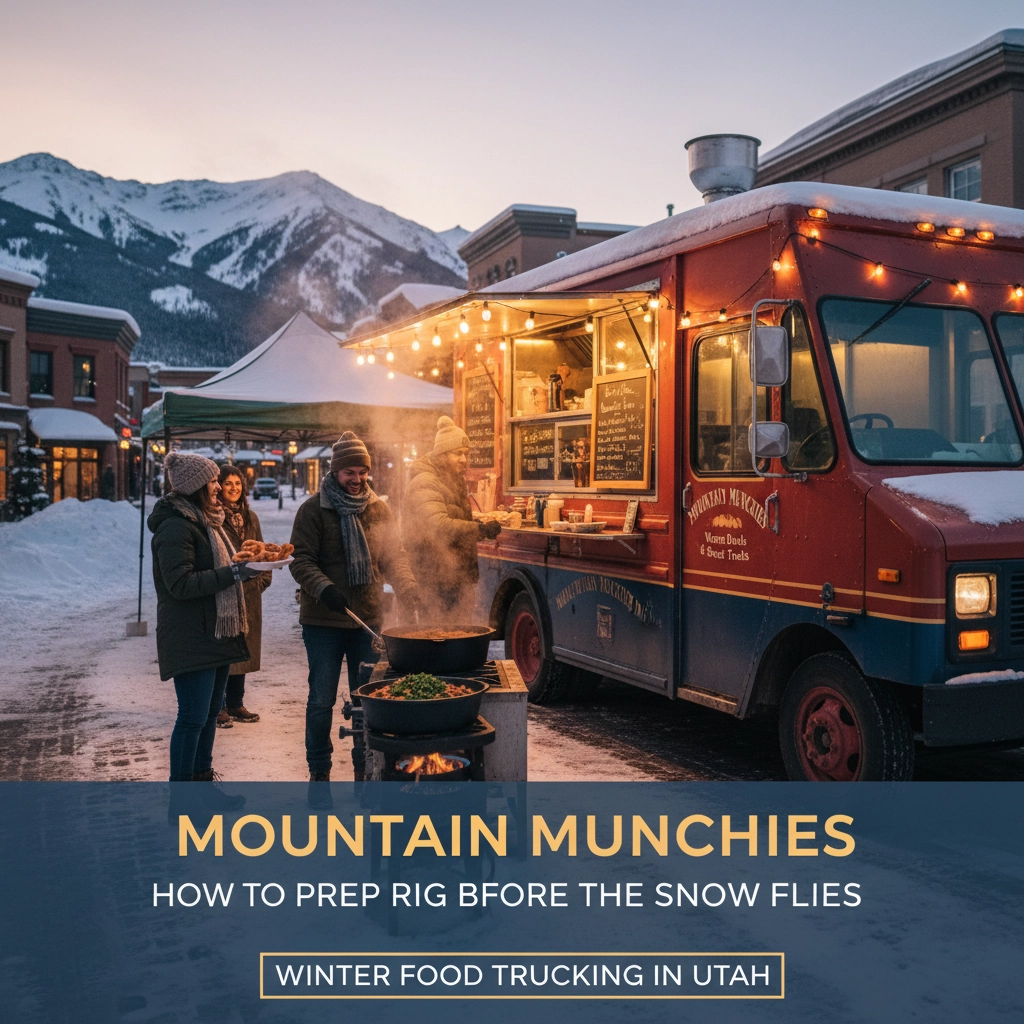
Utah’s winter season can be brutal on food trucks in Utah. From the Wasatch Mountains dumping snow on Salt Lake City to those bone-chilling temperatures that can freeze your water lines faster than you can say “gourmet grilled cheese,” winter prep isn’t just recommended: it’s essential for survival.
As someone who’s seen plenty of food truck operators learn the hard way, I’m here to walk you through everything you need to know about getting your rig winter-ready. Whether you’re running 801 Food Trucks events or just trying to keep serving those die-hard customers who brave the cold, proper preparation makes all the difference.
Why Winter Prep Matters for Utah Food Trucks
Utah winters aren’t messing around. We’re talking about temperatures that can drop well below freezing, snowstorms that dump feet of powder overnight, and conditions that can turn your mobile kitchen into an expensive popsicle if you’re not careful.
The thing is, winter can actually be a goldmine for food ttucks in salt lake city operations if you’re prepared. Holiday parties, winter festivals, ski resort events: there’s money to be made. But only if your truck can handle what Mother Nature throws at it.
Tires: Your First Line of Defense
Let’s start with the most obvious but often overlooked component: your tires. Those rubber circles are literally what keep you moving, and in Utah’s winter conditions, they’re the difference between making it to your event and sliding into a snowbank.
Get winter tires or all-seasons with good tread. Don’t try to tough it out with worn summer tires. The investment in proper tires pays for itself the first time you avoid an accident or make it up that icy hill to a lucrative catering gig.
Check your tire pressure regularly: cold weather causes air to contract, which means lower pressure and reduced traction. Keep a reliable tire gauge in your truck and check pressure at least weekly during winter months.
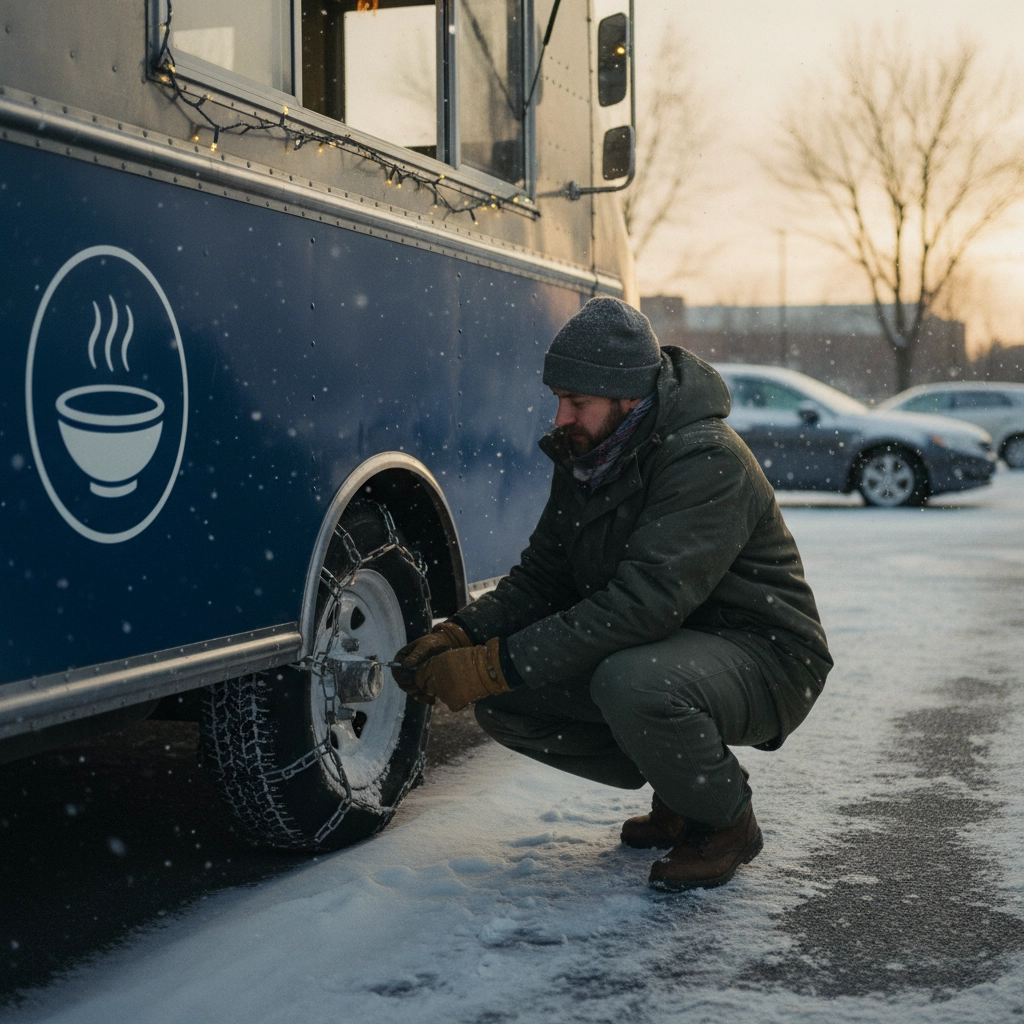
Carry tire chains and know how to use them. Utah law requires certain vehicles to carry chains during winter months, and even if you’re not legally required, having them can save your bacon when conditions get nasty. Practice putting them on in your driveway before you’re stuck on the side of I-80 in a blizzard.
The Essential Tune-Up Checklist
Your food truck Utah needs a thorough physical before winter hits. Here’s what needs attention:
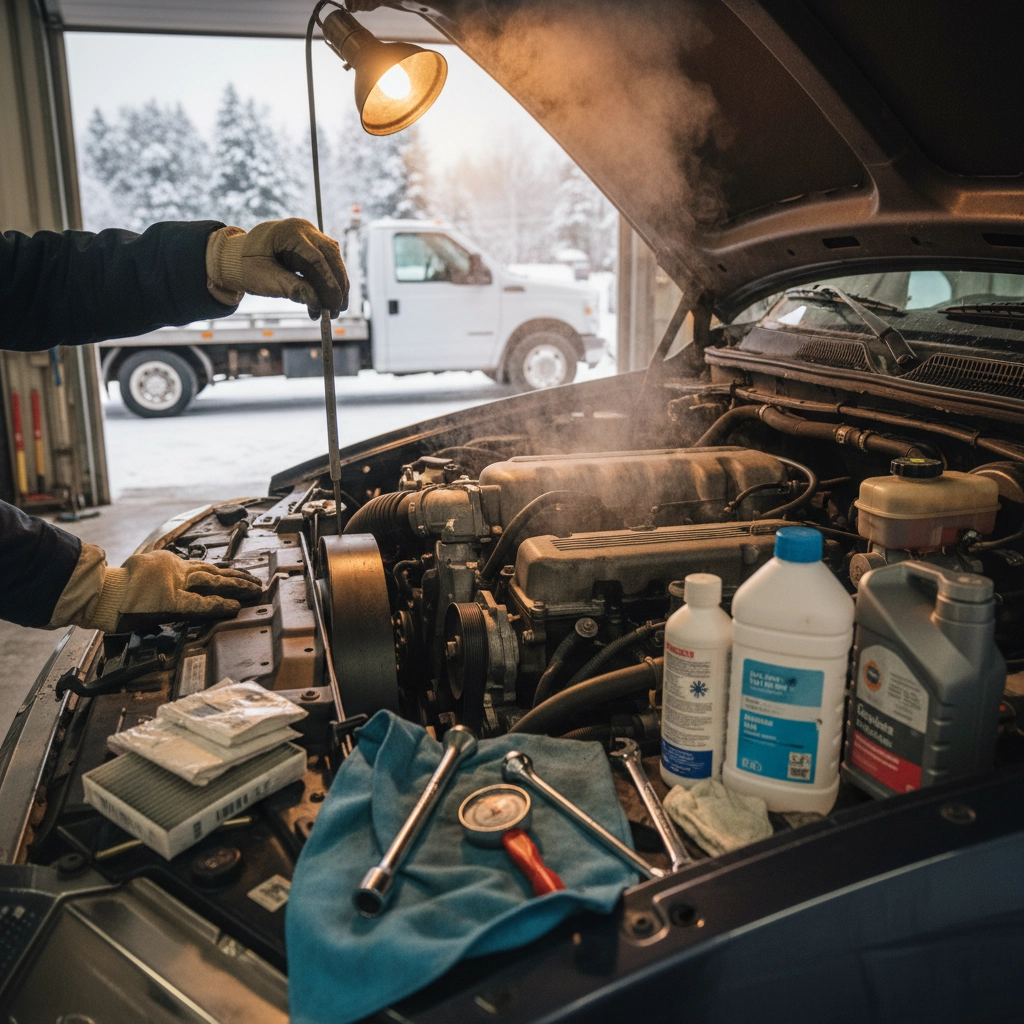
Battery and electrical system: Cold weather is murder on batteries. Have yours tested and replace it if there’s any doubt. Nothing kills your day like a dead battery when you’re supposed to be serving hot cocoa at a winter market.
Fluids check: Oil, coolant, brake fluid, power steering fluid: check them all. Switch to winter-grade oil if your mechanic recommends it. Make sure your coolant is rated for the lowest temperatures you’ll encounter.
Belts and hoses: These rubber components become brittle in cold weather. Replace anything that shows signs of cracking or wear before it fails when you need your truck most.
Brakes: Winter driving is all about stopping safely. Have your brakes inspected and serviced if needed. Fresh brake pads and properly functioning anti-lock brakes can prevent costly accidents and keep your insurance rates reasonable.
Protecting Your Plumbing and Water Systems
This is where a lot of food truck operators get burned (or should I say frozen?). Your water systems are incredibly vulnerable to freezing, and burst pipes can shut you down for days.
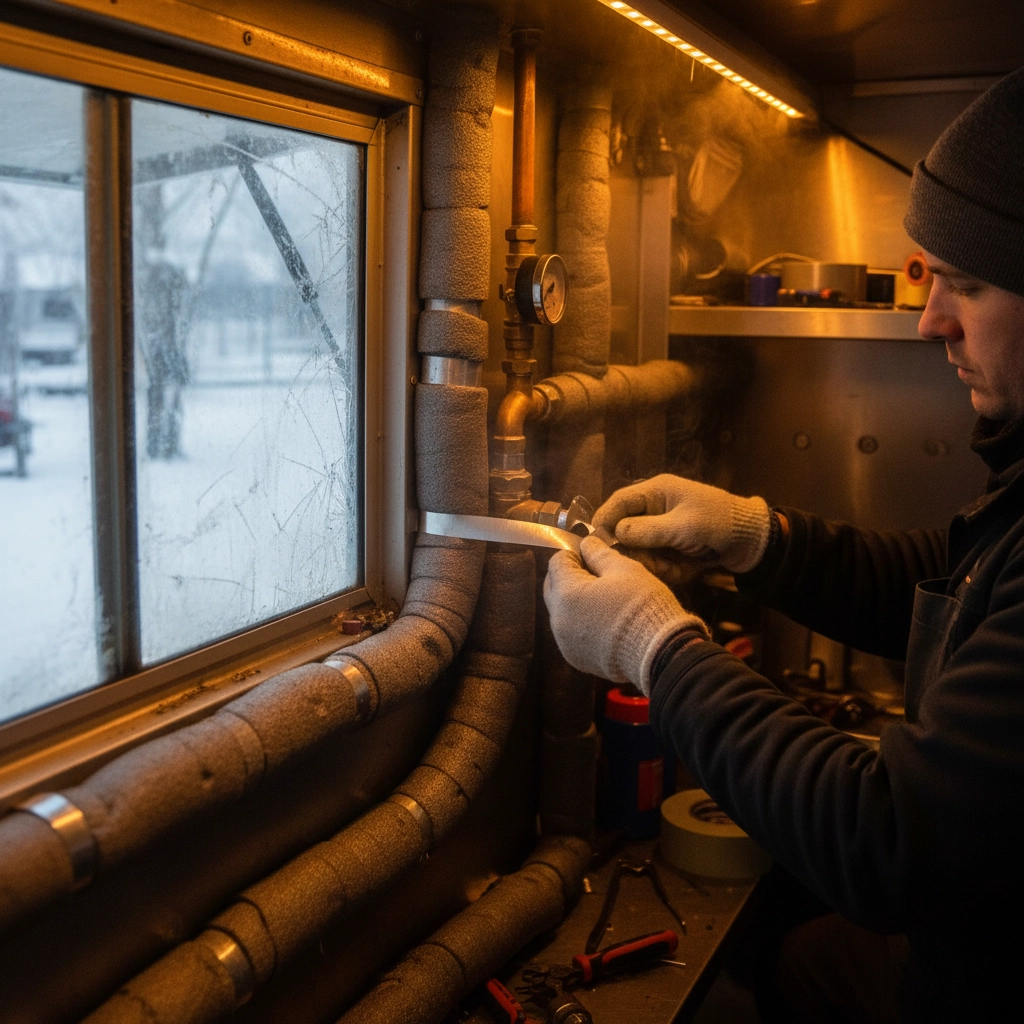
Insulate everything. Wrap your water lines with foam insulation, and consider heat tape for exposed pipes. Your fresh water tank, grey water tank, and all connecting lines need protection.
Invest in a good heater system. A small, safe heater can keep your truck’s interior warm enough to prevent freezing overnight. Some operators leave their trucks plugged into shore power with heaters running during the coldest nights.
Know how to winterize completely. If you’re parking your truck for extended periods, learn how to completely drain and winterize all water systems. RV antifreeze in your lines beats replacing burst pipes.
Heated hoses are worth it. For washing dishes and food prep, heated water hoses ensure you’ve got running water even when it’s frigid outside.
Equipment and Cooking Considerations
Winter affects more than just your truck’s mobility: it impacts how your equipment performs too.
Propane performance: Propane doesn’t vaporize well in extreme cold, which means reduced performance from your cooking equipment. Keep spare tanks warm, consider tank blankets, and always have backups ready.
Ventilation challenges: Your exhaust fans work harder in cold weather, and condensation becomes a bigger issue. Make sure your ventilation system is clean and functioning properly.
Generator maintenance: If you rely on a generator, cold weather starting can be problematic. Use winter-grade fuel, keep the generator warm, and consider a block heater for reliable starting.
Menu and Service Adaptations
Smart food truck rental Utah operators adapt their offerings for winter conditions. This isn’t just about survival: it’s about thriving when others are struggling.
Hot comfort foods rule: Soups, chili, hot sandwiches, warm beverages: these are what customers want when it’s cold. Design your winter menu around items that keep people warm.
Speed up service: Nobody wants to wait in line when it’s freezing. Streamline your menu, prep more items in advance, and consider pre-ordering systems to minimize wait times.
Create warm spaces: If possible, set up wind barriers or even small covered waiting areas. Some successful trucks provide free hot samples while customers wait: it keeps them happy and often leads to additional sales.
Emergency Preparedness
Utah weather can change fast, and being prepared for emergencies isn’t just smart: it’s essential for any serious food truck operation.
Emergency kit essentials: Keep blankets, flashlights, first aid supplies, emergency food and water, and basic tools in your truck at all times.
Communication plan: Have reliable communication with your dispatch, family, and emergency contacts. A dead cell phone in a winter emergency is nobody’s friend.
Weather monitoring: Invest in a good weather radio and pay attention to forecasts. Sometimes the smart move is staying parked rather than risking dangerous conditions.
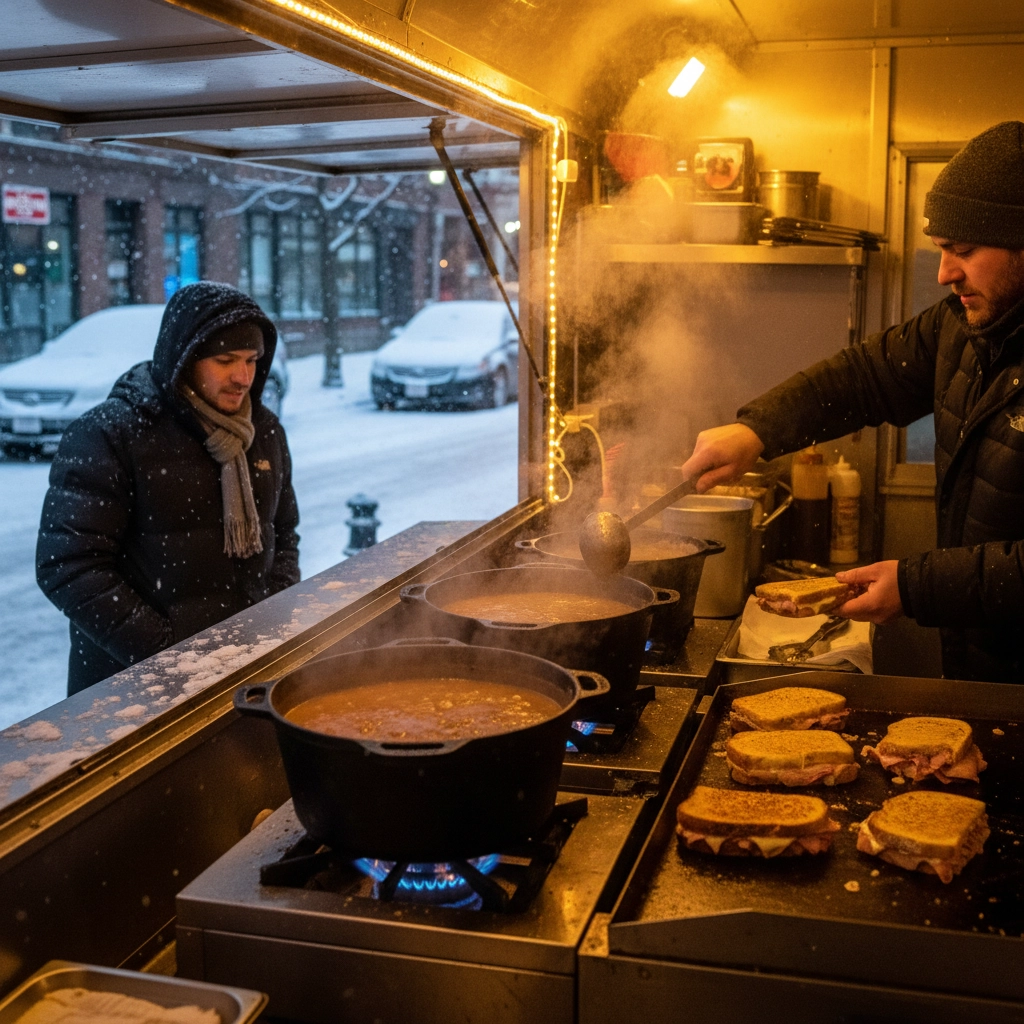
How 801 Food Trucks & Catering Handles Winter Operations
At 801 Food Trucks & Catering, we take winter preparation seriously because our clients depend on us to deliver no matter what Utah’s weather throws at us. Our 801 Food Truck & Catering and Catering by Food Trucks operations continue year-round because we invest in proper preparation.
Every truck in our fleet gets a comprehensive winter inspection before the season starts. We maintain backup equipment, use only properly winterized vehicles, and our drivers are trained in winter driving techniques. When event planners book with us for winter events, they can count on reliable service even in challenging conditions.
We’ve learned that consistency in winter operations builds trust with clients and creates opportunities when other food trucks shut down for the season. While it requires investment and preparation, winter operations can be profitable for serious operators.
The Bottom Line on Winter Prep
Preparing your food truck for Utah’s winter isn’t optional if you want to stay in business year-round. The upfront costs of proper tires, tune-ups, winterization, and equipment maintenance are nothing compared to the cost of breakdowns, accidents, or lost business.
Start your winter prep in late fall, before the first serious storm hits. Create a checklist, stick to it, and don’t cut corners on safety equipment or maintenance. The food truck operators who thrive through Utah winters are the ones who take preparation seriously and invest in doing it right.
Remember, winter preparation isn’t just about surviving the season: it’s about positioning yourself to take advantage of the opportunities other operators miss because they weren’t ready. When you’re the only food truck that shows up to that lucrative winter event because you were properly prepared, all that preparation pays for itself.
Stay warm, stay safe, and keep those wheels rolling through whatever winter throws your way. Your customers (and your bank account) will thank you for it.
 Food Truck Blog
Leave a comment