A Real Behind-the-Scenes Look at Food Trucking in Utah: The Grit and Glory of 801 Food Trucks
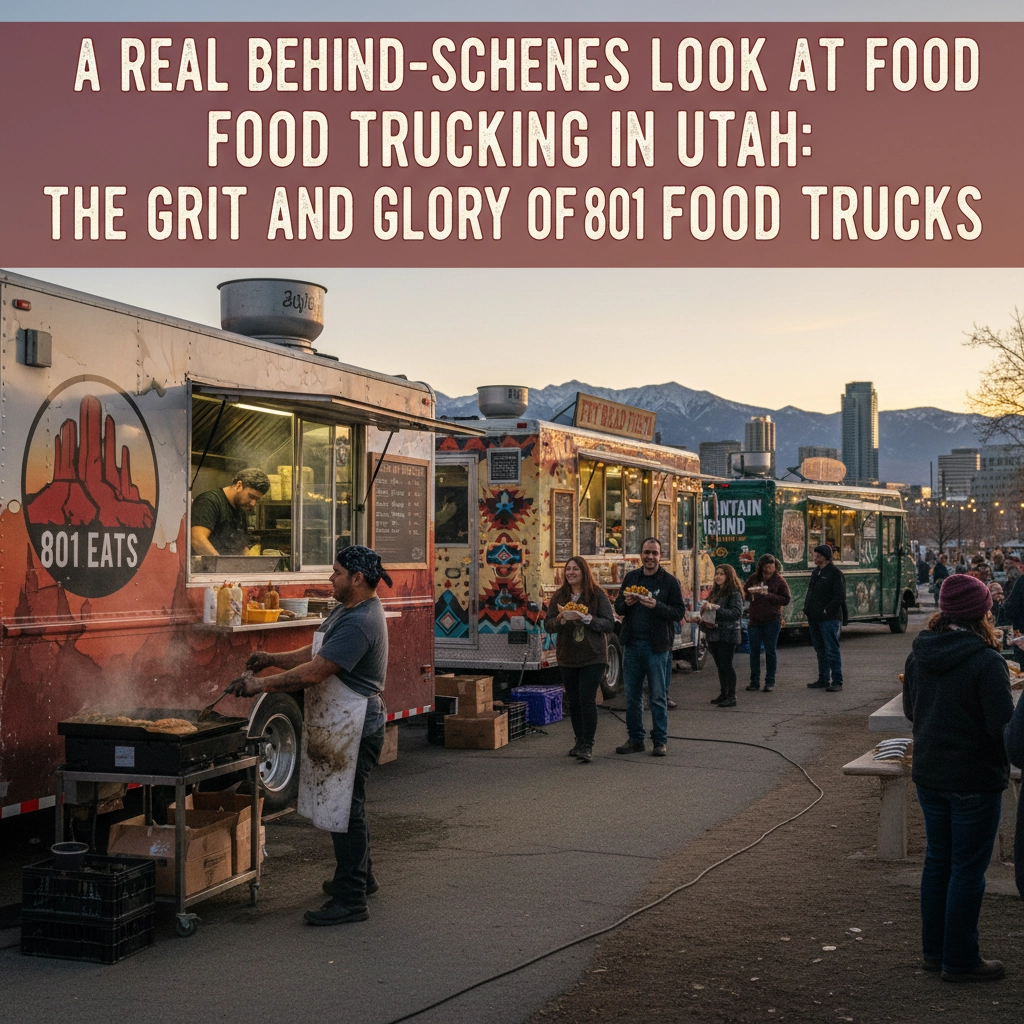
You see the Instagram posts, the happy customers at events, and the perfectly plated food. But what you don’t see? The 4 AM prep sessions, the frantic calls when a truck breaks down an hour before an event, or the months of planning that go into making one wedding look effortless.
Running food trucks in Utah isn’t just about slinging great food from a window. It’s a 24/7 hustle that most people never get to witness. Let’s pull back the curtain on what it really takes to operate the best food truck catering Utah has to offer.
The Booking Marathon: Planning Months Ahead
When couples call us in January asking about catering their June wedding, they’re actually cutting it pretty close. Most of our premium dates for food truck catering Salt Lake City events get booked 3-5 months in advance – sometimes even longer for popular summer wedding dates.
This isn’t just us being picky. It’s pure logistics. We’re coordinating multiple trucks, dozens of events per month, and ensuring we have the right crew for each concept. When someone books our Korean BBQ truck for their corporate event, we need to make sure our specialist chef is available, the truck is scheduled for maintenance beforehand, and we’ve ordered enough kimchi to feed 200 hungry office workers.

The booking process alone involves countless phone calls, site visits, menu tastings, contract negotiations, and deposit collections. What looks like a simple “yes, we’re available” response actually represents hours of behind-the-scenes coordination.
The Endless Hours Nobody Sees
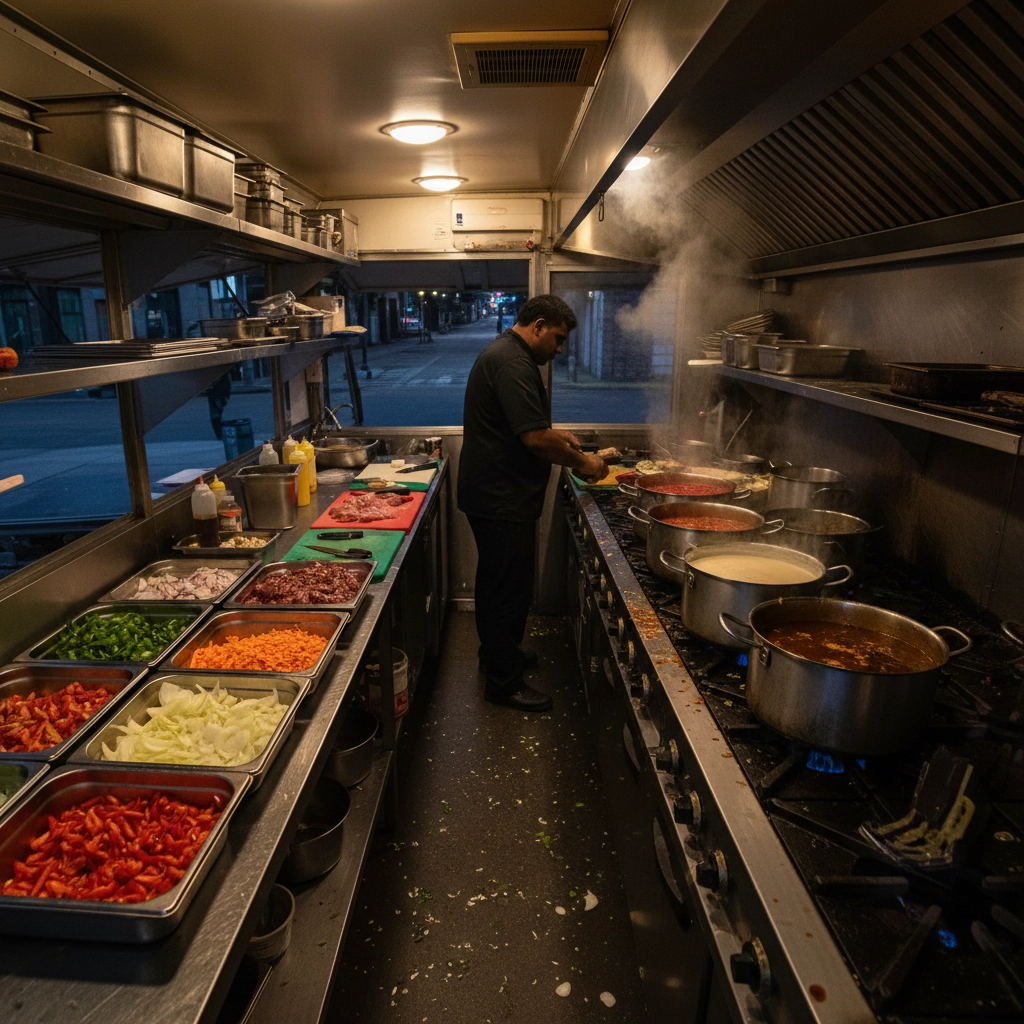
For every four-hour wedding reception, there are at least twelve hours of work you never witness. Our day starts at 5 AM with prep work – chopping vegetables, marinating proteins, mixing sauces, and loading trucks. The actual event might run from 5-9 PM, but we’re still cleaning equipment, restocking inventory, and prepping for the next day until well past midnight.
Those picture-perfect tacos don’t magically appear. Someone spent two hours that morning preparing fresh salsa, another hour grilling chicken to perfection, and thirty minutes just organizing the serving station so everything flows smoothly during service.
And after the last guest leaves? We’re breaking down equipment, washing dishes in cramped truck sinks, disposing of waste properly, and driving back to our commissary to restock for tomorrow’s events. The glamorous food truck Utah lifestyle is about 20% serving customers and 80% everything else.
Marketing Never Stops
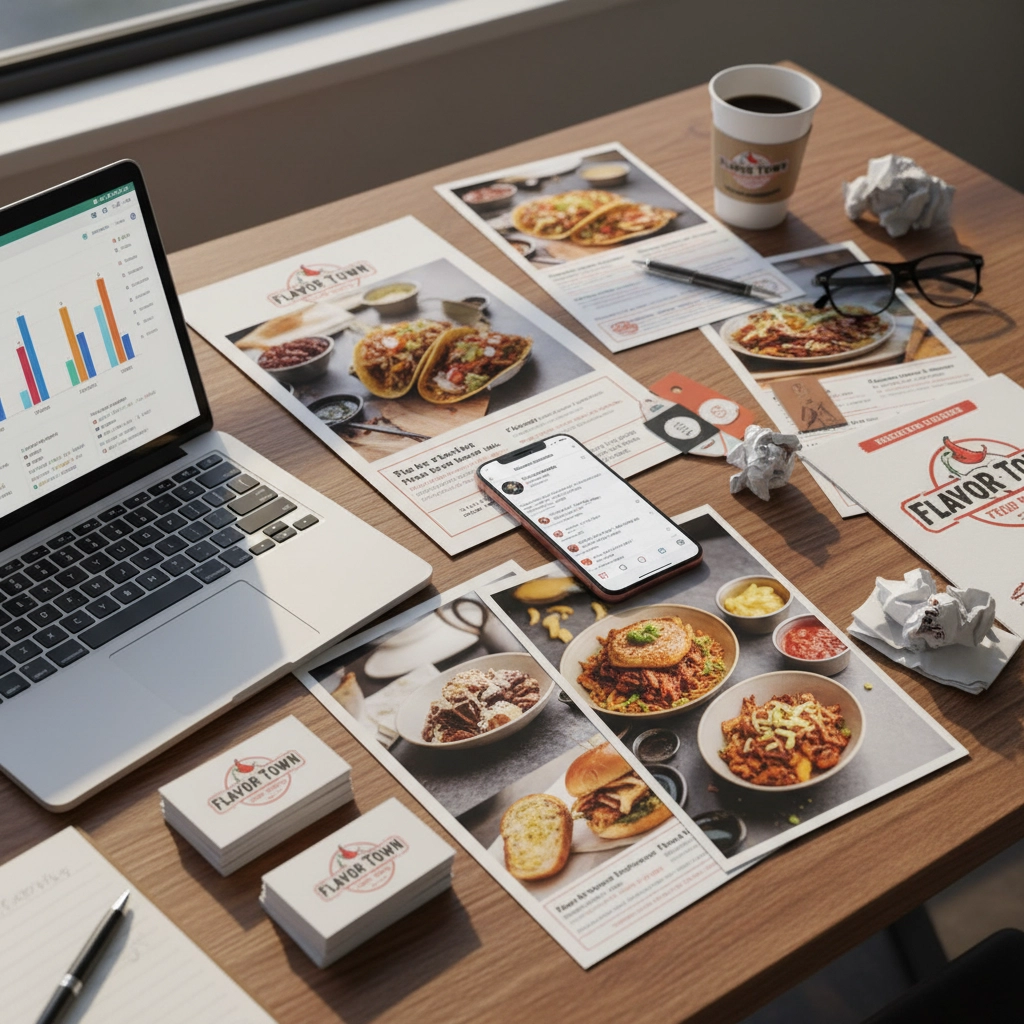
Social media makes it look easy – post a few food pics, share an event location, and customers will find you. Reality check: we spend 15-20 hours every week on marketing alone.
Every food photo gets staged, shot, edited, and scheduled across multiple platforms. We’re constantly creating content, responding to DMs, updating our website, managing Google reviews, and reaching out to event planners. Then there’s the old-school marketing – attending wedding expos, networking with corporate event coordinators, and building relationships with venues across the Wasatch Front.
The food truck rental Utah market is incredibly competitive. We’re not just competing against other food trucks – we’re up against traditional caterers, restaurants offering delivery, and DIY options. Standing out requires constant creativity and consistent messaging.
60-70 Weeks of Nonstop Operations
Most restaurants get to close on slow Monday nights or take a January break after the holidays. Food trucks? We operate 60-70 weeks per year, only shutting down for major truck maintenance or when Utah weather becomes genuinely dangerous.
Spring wedding season bleeds into summer corporate events, which flow into fall festivals, then straight into holiday parties. There’s maybe a two-week window in January where we catch our breath before wedding planning season kicks into high gear again.
Each truck logs thousands of miles annually, traveling from Park City corporate retreats to Provo family reunions. Every mile adds wear and tear, every setup and breakdown stresses equipment, and every event is another chance for something to go wrong.
The Weekly Food Ordering Chess Game
Planning food orders a week in advance sounds reasonable until you factor in Utah’s unpredictable weather, last-minute guest count changes, and supply chain disruptions that seem to hit the food service industry monthly.
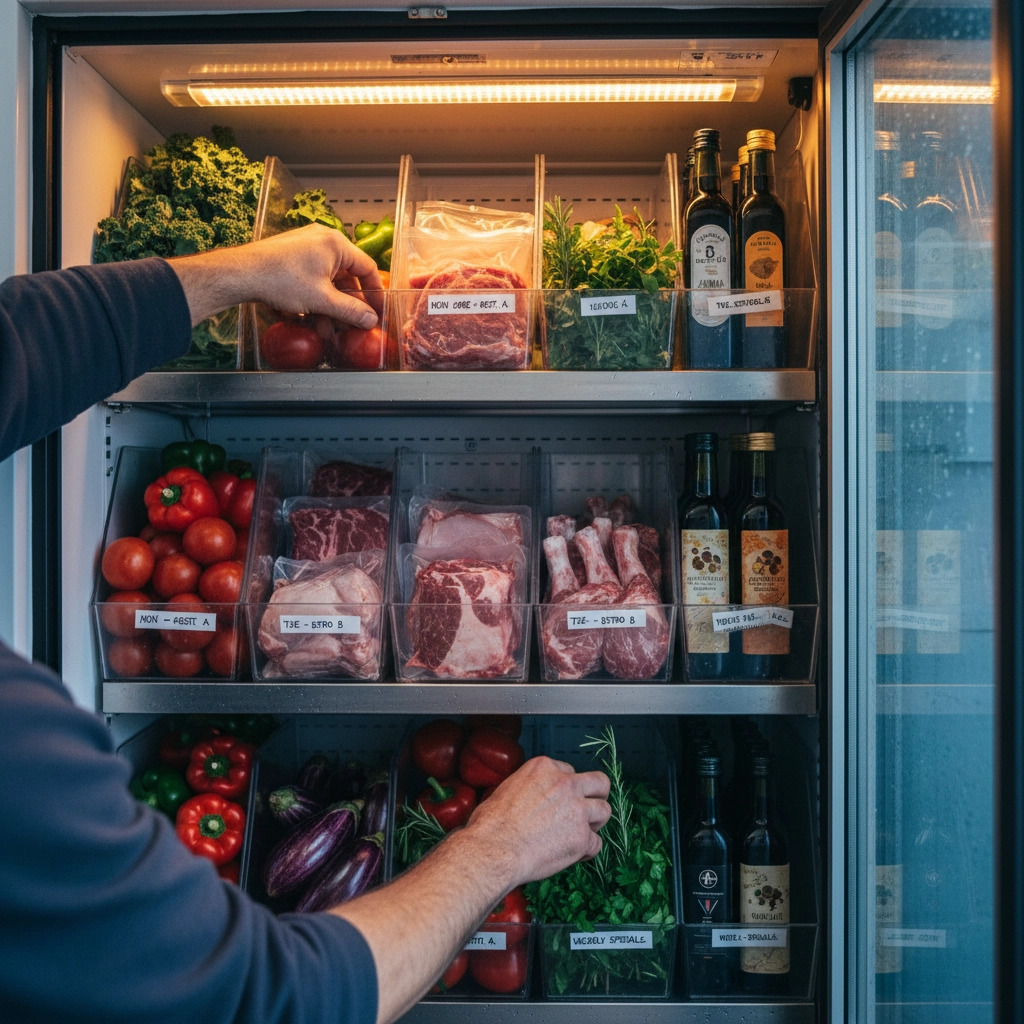
We’re ordering proteins, produce, specialty ingredients, packaging, and beverages for events we won’t serve for seven days. Too little food means disappointed customers and lost revenue. Too much means waste and blown profit margins. Getting it right requires tracking historical data, monitoring weather forecasts, and maintaining relationships with multiple suppliers.
When our Korean BBQ truck serves 300 people at a tech company’s quarterly meeting, we need exactly the right amount of bulgogi, kimchi, rice, and banchan. Run out of kimchi halfway through service? The entire experience suffers. Order too much? We’re eating the cost of expensive specialty ingredients.
When Everything Goes Wrong
Food truck breakdowns don’t happen during convenient downtime – they occur at 2 PM when you’re supposed to be across town serving lunch in thirty minutes. We’ve had refrigeration units fail during 95-degree summer days, generators quit during setup, and flat tires on the freeway with a truck full of prepped food.
The backup plans have backup plans. We maintain relationships with emergency repair shops, keep spare equipment at our commissary, and cross-train our team so anyone can operate any truck concept if needed. Sometimes we’ve literally transferred an entire event’s worth of food from a broken truck to our backup vehicle in a grocery store parking lot.
Then there are the customer cancellations. Wedding postponements, corporate budget cuts, weather-related event cancellations – usually with 24-48 hours notice. We’ve already ordered specialty ingredients, scheduled staff, and blocked out truck availability. Last-minute cancellations can wipe out an entire week’s profit in a single phone call.
The Weekly Maintenance Grind
Every food truck gets deep-cleaned weekly, inside and out. Equipment gets inspected, oil changed, tires rotated, and any wear items replaced. What looks like simple food service actually involves maintaining complex mobile kitchens that operate in harsh conditions.
Our team spends 8-10 hours every week on maintenance alone – scrubbing fryers, calibrating thermometers, replacing worn gaskets, and organizing storage areas. Health department inspectors can show up anytime, so every truck stays inspection-ready constantly.
Regular maintenance prevents most problems, but food trucks are essentially restaurants on wheels. They face challenges traditional kitchens never encounter – road vibration loosening connections, varying electrical supply at different venues, and equipment that must function perfectly whether it’s 15 degrees or 95 degrees outside.
The Wedding Tasting Marathon
Wedding tastings sound fun until you realize we conduct 2-3 per week during peak season. Each tasting represents 3-4 hours of prep, cooking, presentation, and cleanup – all for potential customers who might book another vendor.
We prepare full-portion samples of 6-8 menu items, transport everything to the tasting location, set up a mini service station, and walk couples through our entire catering process. Some couples need multiple tastings to decide between concepts, or they’ll request custom menu modifications that require additional tastings.
Wedding tastings are essential for closing sales, but they’re incredibly resource-intensive. For every tasting that results in a booking, we might conduct three that don’t. It’s part of the business, but it represents hundreds of unpaid hours annually.
Why We Do It
Despite the challenges, running food truck catering Salt Lake City events remains incredibly rewarding. There’s something magical about watching a corporate team bond over Korean tacos, seeing a bride’s face light up when her guests rave about the food, or serving comfort food that makes people genuinely happy.
We’ve built something unique in Utah’s food scene – authentic, high-quality mobile dining that brings restaurant-level experiences directly to our customers. Every early morning, every breakdown, every cancelled event, and every successful service contributes to something larger than individual meals.
The behind-the-scenes reality is messy, unpredictable, and exhausting. But when everything comes together perfectly – the food is exceptional, the service flows smoothly, and customers leave raving about their experience – those moments make every challenge worthwhile.
That’s the real story behind 801 Food Trucks & Catering: a team of food-obsessed professionals who’ve chosen to make the complicated world of mobile dining look effortless, one perfectly executed event at a time.
 Food Truck Blog
Leave a comment